You are here

Name
- Name
- TatianaCaelie
Personal details
- Location
- USA
- Web
- https://kickofftech.com/
- Short Bio
- How to choose a TV to play?
"Can I use a TV as a game monitor? This has been a recurring question for ages, or at least since TVs began to approach the visual standards of PC monitors.One of our readers, has rephrased this question, asking, "What features does my TV need to be used as a monitor? "First, you can use almost any TV as a game monitor, as long as it has the right inputs to hook up your machine. However, the presence of an HDMI port does not mean that you can rush on any TV. While TVs have many advantages over monitors for movie-goers, it's not without reason that most gamers prefer a smaller display, but cut for gaming.However, hard not to recognize the comfort of play, once slumped into a sofa facing a 55 or a 65 inch!
Why prefer a TV?The good news is that if you want to connect a PC to a TV, almost all modern models will work. A TV, whether it's HD-ready, Full HD or Ultra HD, will certainly have an HDMI port , as well as any graphics card less than 10 years old. This means that to connect a PC to a TV, just have an HDMI cable. But it is also possible that said TV is provided with a VGA or DVI input, in which case it is possible to use this port to connect its PC. Only downside, it will then use a separate audio connection, these two connections carrying only the video and not the sound.
Why stick to the monitor?
There are many reasons to use a TV rather than a traditional monitor. The main is the size . TVs are usually wider than PC screens. Considering the choice between playing The Witcher 3 on a 20-inch screen or slouching on his couch to live his adventure on a 55-inch, it's not hard to see why some users opt for the latter.
Secondly, we can invoke the improvement of the layout of a PC universe connected to a TV. A few years ago, you had to run cables everywhere between the TV and the PC, the PC and the mouse, the keyboard, the headphones, and so on. Now, all these devices exist in wireless , giving the PC the advantage of the console, especially if you play rather the controller. Even Steam has adapted its interface to use with the pad.On the other hand, TVs do not perfectly replace conventional monitors. If this were the case, there would have been a decline in sales and innovations in this area, which is not the case, far from it.
The first problem encountered with a TV is the delay in the display (input lag), the latency that separates the command sent by the player and its execution on the screen. Admittedly, this delay is measured in milliseconds and does not make any difference in the solo games. On the other hand, if you try to master Overwatch or other multiplayer titles, a split second can mean the difference between a win and a defeat. The monitors cut for the game, they have more and more technologies to reduce this input lag. Two systems clash: G-Sync at Nvidia and FreeSync at AMD, the first being more successful, according to our colleagues Tom's Hardware.
There is also the question of ports. As noted above, you can connect your PC to the TV - and even play in Ultra HD - with a standard HDMI cable. But HDMI ports are not the pinnacle of audio-visual fidelity. Most gaming monitors now accept DisplayPort , a connector that offers a much faster and more reliable display. TV side, even high-end models are not equipped with DisplayPort.
If your computer is better for Full HD than QHD or UDH, a large TV can do more harm than good. In 1080p, games naturally appear better on a diagonal of 30 inches or less. On a larger slab, it will take a step back to not distinguish the pixels or have a clear image. We can argue that the current consoles display in 1080p (except the Xbox One X and PS4 Pro), but they have a more limited hardware than a mid-range gaming PC, something to hope for a better experience with such a machine.
What are the characteristics of a gaming TV?If you still want to go to a TV, you should start your search by looking at a website like DisplayLag.com , which measures the speed at which modern TVs receive the signal from an input device.
As stated above, the main reason why TVs are not good game monitors is the delay in response time, or delay in display. Some models have calibration methods to mitigate this gap, they are the ones to covet.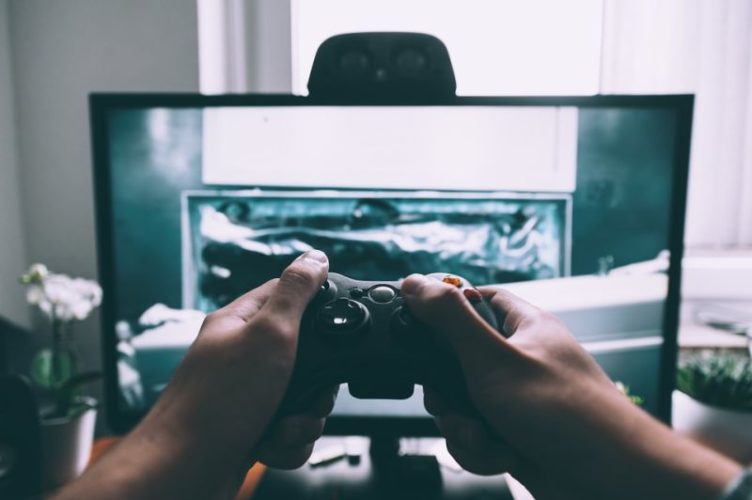
Side definition, aim for the Ultra HD directly. Full HD models no longer run the streets or are at the end of their life. Even if your PC is not powerful enough to display in this definition, the TV's processor will do its job and upscalera the Full HD image in Ultra HD. In most cases, the result is convincing. However, this is something to check in published tests.
Beyond that, the features to look for are standard expectations such as the quality of the image, the operating system (Android TV, etc.) or the speakers. For this, we urge you to visit our TV guide and its detailed selections.At the moment, even a very good TV can not replace the performance of a gaming monitor, but it is possible to find large monitors. For example, the latest addition to Philips is the Momentum 436M6VBPAB . With a diagonal of 43 inches, it is Ultra HD, HDR and FreeSync. A winning trio to enjoy the ultimate gaming experience on the big screen. Only downside, its price: nearly 900 €.
Can I use a TV as a game monitor? This has been a recurring question for ages, or at least since TVs began to approach the visual standards of PC monitors.Click here to see more
History
- Member for
- 6 years 6 months