
Ready-to-use server
Django
High-level Python Web Framework
- Debian based
- Automatic security updates
- Free and open source
Django screenshots
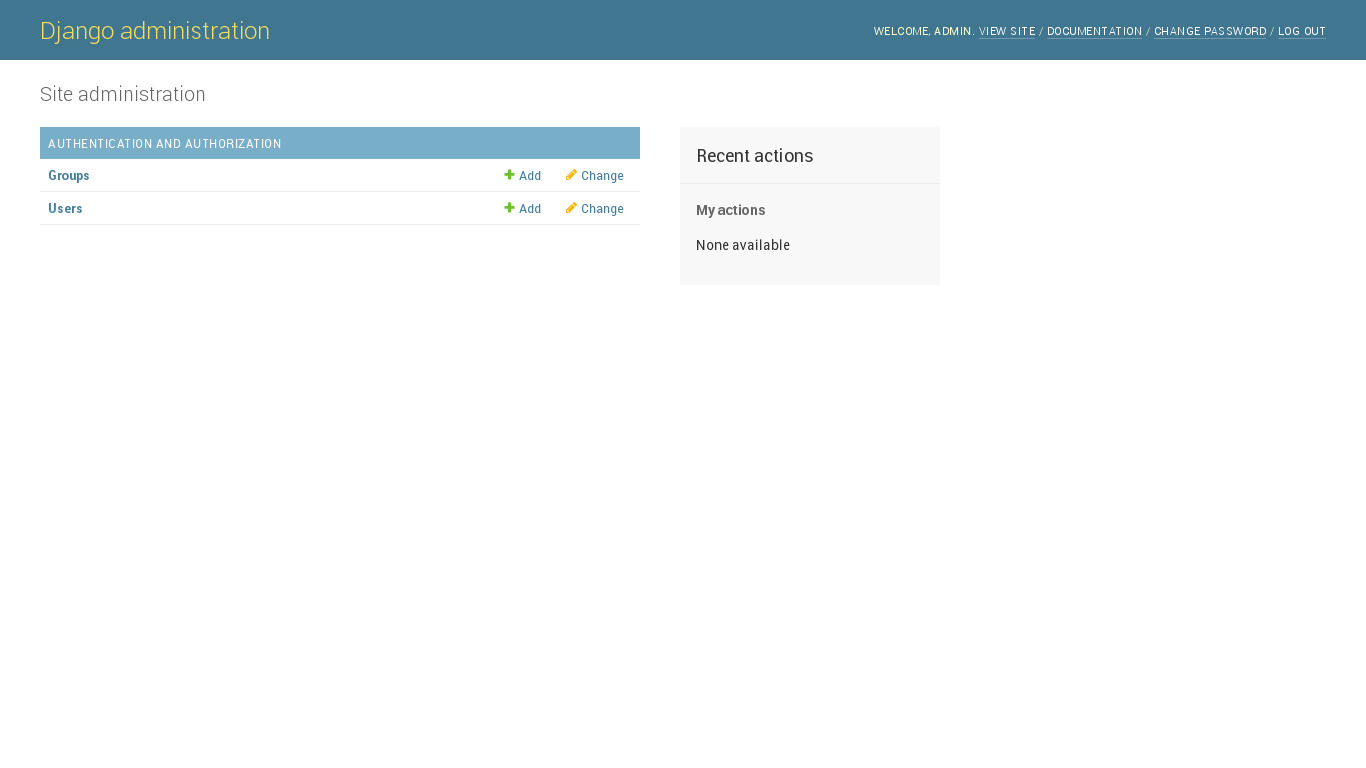

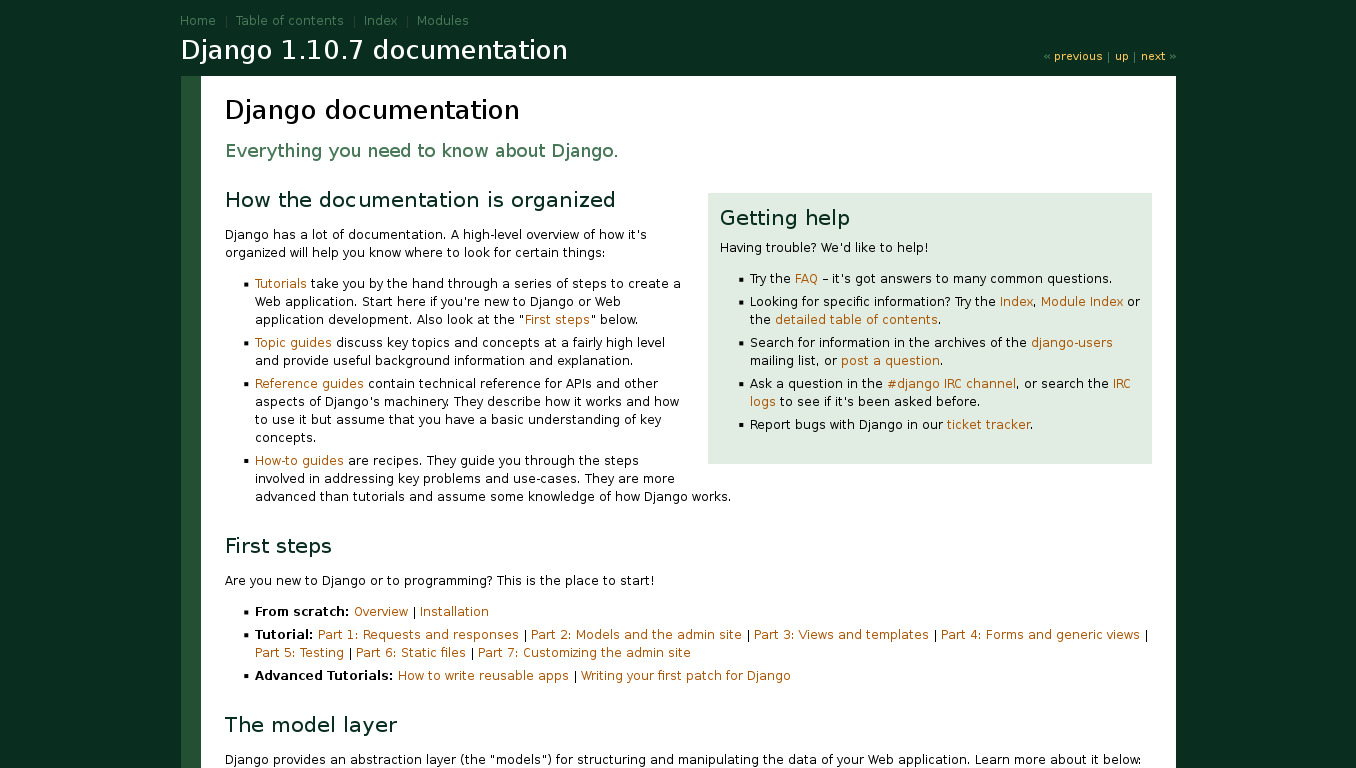
Django is a high-level Python Web framework that encourages rapid development and clean, pragmatic design. Python's equivalent to the famous Ruby on rails, Django lets you build high-performing, elegant Web applications quickly. Django focuses on automating as much as possible and adhering to the "Don't Repeat Yourself" (DRY) principle.
This appliance includes all the standard features in TurnKey Core, and on top of that:
SSL support out of the box.
Preconfigured Django 4.2 example project located at /var/www/turnkey_project.
Integrated with Apache2 (mod_wsgi), MariaDB and Postfix.
Built-in administration console with embedded online documentation.
Python 3 build of Django installed from Debian repositories.
IPython for enhanced Django shell interaction.
Webmin modules for configuring Apache2 and MariaDB.
Credentials (passwords set at first boot)
Webmin, SSH, MariaDB: username root
Django admin console: username admin
Run from browser
V 19.0
V 18.0
GitHub
Usage details & Logging in for Administration
No default passwords: For security reasons there are no default passwords. All passwords are set at system initialization time.
Ignore SSL browser warning: browsers don't like self-signed SSL certificates, but this is the only kind that can be generated automatically without paying a commercial Certificate Authority.
Username for django admin console:
Login as username admin
Web - point your browser at either:
- http://12.34.56.789/ - not encrypted so no browser warning
- https://12.34.56.789/ - encrypted with self-signed SSL certificate
Username for database administration:
- MySQL command line tool; log in as root (no password required):
$ mysql --user root
Welcome to the MySQL monitor.  Commands end with ; or \g.
Type 'help;' or '\h' for help. Type '\c' to clear the current input statement.

mysql>
Username for OS system administration:
Login as root except on AWS marketplace which uses username admin.
- Point your browser to:
- https://12.34.56.789:12321/ - System control panel
- https://12.34.56.789:12320/ - Web based command line terminal
- Login with SSH client:
ssh root@12.34.56.789
Special case for AWS marketplace:
ssh admin@12.34.56.789
* Replace 12.34.56.789 with a valid IP or hostname.